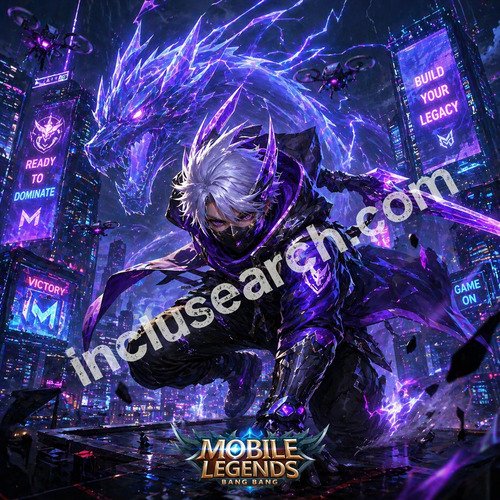
inclusearch.com – Mobile Legends: Bang Bang is often played as a fast-paced action game, but at its core, it is a strategic competition where knowledge and decision-making matter just as much as mechanical ability. Every hero in the game carries a specific identity, and that identity only becomes powerful when used in the right situation, with the right timing, and in coordination with teammates. Players who rely only on mechanics may win some fights, but those who understand hero roles and game flow consistently perform better over time.
What makes Mobile Legends interesting is how every match evolves. A hero that feels weak early can become unstoppable later, while a dominant early-game hero may lose impact if the match drags on too long. This dynamic system forces players to think beyond simple combat and focus on strategy, awareness, and adaptation.
To truly understand heroes, players must see them not as isolated characters but as parts of a larger system. Every skill, item, and movement contributes to a bigger objective: controlling the map, winning fights, and ultimately destroying the enemy base.
Hero Roles and Their Strategic Identity in Team Composition
Each hero in Mobile Legends belongs to a role that defines how they interact with the game. These roles are not just labels but frameworks that guide decision-making, positioning, and timing throughout the match.
Tank heroes are the foundation of any team. Their high durability allows them to absorb damage, but their real strength lies in controlling how fights begin and unfold. A good tank does not simply stand in front—they dictate space, vision, and tempo.
One of the most important responsibilities of tanks is initiating fights at the right moment. Engaging too early can isolate the team, while engaging too late can allow enemies to escape or gain advantage. Timing is everything, and experienced tank players learn to read enemy positioning before committing.
Tanks also provide vision control, which is often underestimated. By checking bushes and scouting dangerous zones, they prevent ambushes and create safe paths for their teammates. This information advantage is often what separates winning teams from losing ones.
In many situations, tanks act as the “bridge” between offense and defense. They decide when the team can safely move forward and when it should hold position.
Marksmen and the Responsibility of Scaling Damage
Marksmen are the primary damage dealers in the late game. Their power increases significantly with items, allowing them to melt both heroes and objectives. However, their effectiveness is highly dependent on survival and positioning.
In the early game, marksmen are usually weak and vulnerable. Their main focus is farming and staying alive. Every wave of minions and jungle camp matters because their power spikes are directly tied to item completion.
As the game progresses, marksmen transition into the main carry role. During team fights, they must stay behind the frontline and continuously deal damage without exposing themselves to danger. One wrong step can result in instant elimination.
Good marksman players understand patience. Instead of chasing kills, they focus on consistent damage output and survival, which ultimately leads to higher impact in fights.
Mages, Fighters, Assassins, and Supports as Flexible Impact Roles
Mages are burst damage specialists with strong area control abilities. They excel in mid-game fights where their skill damage can hit multiple enemies at once. A well-timed mage combo can completely shift the outcome of a battle.
Fighters are hybrid heroes that combine durability and damage. They are flexible enough to act as frontliners or side laners depending on the situation. Their adaptability makes them valuable in almost every team composition.
Assassins rely on timing, mobility, and burst damage. Their goal is to eliminate key targets like marksmen or mages as quickly as possible. However, they must wait for the right opportunity because rushing in too early often leads to failure.
Supports enhance team performance through healing, shields, crowd control, or utility effects. Even though they rarely deal high damage, their contribution is essential for keeping the team alive and enabling successful fights.
Game Phases and How Hero Strength Changes Over Time
Understanding Mobile Legends also means understanding how the match evolves. Each phase of the game changes priorities and influences how heroes should be played.
The early game is focused on stability, farming, and safe development. Heroes aim to collect gold and experience while minimizing unnecessary risks.
Every small advantage gained in this phase can influence the entire match. Losing early fights or dying repeatedly can delay item progression and reduce a hero’s impact later.
Map awareness plays a major role here. Knowing enemy positions helps prevent ambushes and allows players to make safer decisions. Objectives like Turtle provide early advantages but should only be contested when conditions are favorable.
At this stage, discipline is more valuable than aggression. Smart players prioritize consistency over risky plays.
Mid Game: Rotation, Pressure, and Map Control
The mid game is where the match becomes more active. Heroes begin to complete core items, and team fights occur more frequently.
Rotations become extremely important. Moving between lanes as a group allows teams to apply pressure, secure objectives, and create numerical advantages. Tower destruction also becomes a priority because it expands map control.
Communication and coordination play a bigger role in this phase. Teams that move together and make synchronized decisions usually gain momentum.
This is also the phase where mistakes start to become more punishing. Poor positioning or isolated movements can quickly lead to lost objectives.
Late Game: Precision, Discipline, and High-Stakes Decisions
The late game is the most critical phase in Mobile Legends. Every decision carries heavy consequences because respawn times are long and objectives are highly impactful.
Team fights require perfect coordination. Tanks initiate, damage dealers follow up, and supports ensure survival. Even small errors can result in losing the entire match.
Objectives like Lord become game-deciding factors. Securing them often creates enough pressure to finish the game, but contesting them requires careful preparation and vision control.
In this phase, patience becomes the most important skill. Rushed decisions often lead to defeat.
True improvement in Mobile Legends does not come from playing more games alone, but from developing better habits and understanding deeper strategies.
Adaptive Itemization Based on Match Conditions
Item builds should always be flexible. Every match is different, and enemy compositions require different responses.
Defensive items help survive burst damage, while offensive items increase kill potential and damage output. Understanding when to adjust builds is a sign of advanced gameplay knowledge.
Players who adapt their items properly are often more consistent and effective across different situations.
Map Awareness and Decision-Making Intelligence
Map awareness is one of the most powerful skills in the game. Regularly checking the minimap provides information that influences movement, positioning, and engagement decisions.
Good decision-making is based on information, not impulse. Knowing when to fight, retreat, or rotate is essential for maintaining control of the match.
Players with strong awareness tend to make fewer mistakes and contribute more consistently.
Learning Through Experience and Strategic Reflection
Every match is an opportunity to learn. Wins reinforce good habits, while losses highlight weaknesses that need improvement.
Studying gameplay, analyzing mistakes, and observing skilled players help expand understanding of the game. Adaptation is necessary because Mobile Legends continues to evolve with balance changes and updates.
Players who embrace learning improve steadily over time and develop a deeper understanding of the game.
Conclusion Mobile Legends Hero Mastery: How Strategy, Timing, and Adaptation Define True Skill
Mobile Legends: Bang Bang is a game built on strategy, teamwork, and adaptation. Every hero has a defined role, but true effectiveness depends on how well that role is executed within the flow of the match.
From tanks that control engagements to marksmen that dominate late-game fights, every hero contributes to the team in a meaningful way. Understanding game phases, making smart decisions, and adapting to different situations are the keys to consistent success.
Ultimately, hero mastery is not about reaching a final point but about continuous growth. The more a player understands the game, the more they realize how deep and strategic Mobile Legends truly is.
About the Author
